Tuesday, 2 May 2017

Mewslade Spring

The lane leading from the main road down to the Mewslade Valley is under a tunnel of windswept trees, at last covered with the greens of spring. A whitethroat guards the gate at the end of the lane. Beyond on the cliffs, there’s a south-facing sheltered hollow where I often sit. From here high above the path, I look down the valley to the sea.  The well-trodden path meanders below, following the line of an old limestone wall, suggesting an ancient farm boundary. On either side of the valley, vibrant gorse cascades down as if painting the steep slopes. Beautiful emerging greens contrast with the yellow gorse; everything looks fresh and new, and at last spring has won the battle with the cold weather. It’s always best to look for wildlife from above the gorse, a long-tailed tit searches for insects for its nestlings in blackthorn, willow warblers, clearly en route north, catch flies on the wing and come so close at times, that I hear their bills snap tight. Swallows drift in from the sea and are gone in a flash; I marvel at their journey, and wonder where they’re heading.

Moles have been busy; their new mounds litter each side of the path, with old ones covered by last year’s grass.  Only a few trees survive in this wind-swept place, and those that do grow at crazy angles away from the prevailing weather. Young nettles sprout amongst glowing celandines, and the first clumps of foxglove leaves are out. 

Staying high above the valley the turf-covered path to the cliff top passes patches of recently burned gorse. Looking ugly now, they’ll recover in time, but it will be good for the land in the long term. Badgers have been busy overnight, their scrapes dotting both sides of the path.
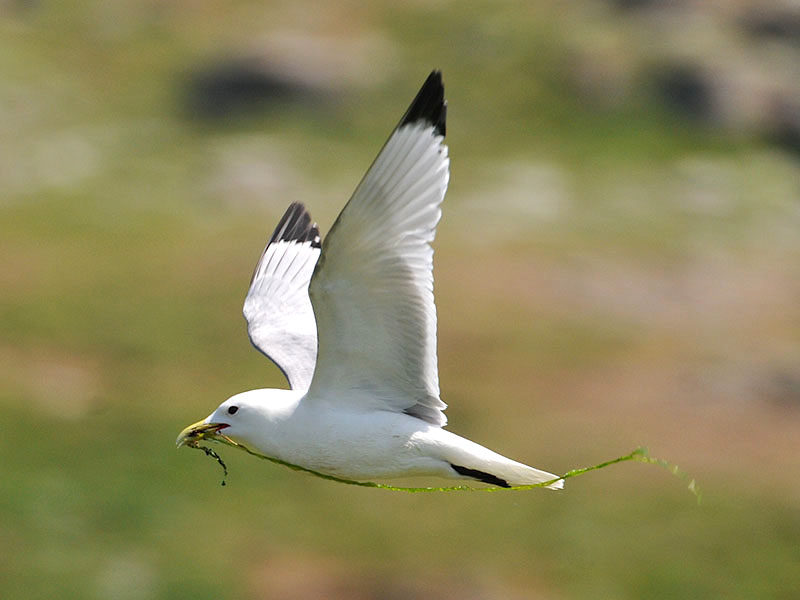
From the top of the cliff, the beach and the massive cliff that is Lewis Castle send a shiver down my spine. Pristine sand, pure white surf, deep blue sea, and the uniquely coloured Gower limestone take my breath away. I walk west to Devil’s Truck, where years ago noisy kittiwakes bred. Long gone now, the ledges are occupied by just a single pair of herring gulls and a pair of fulmars. I sit and marvel at the fulmars; I could stay and watch them all day.


Sunday, 30 April 2017

Sanitised Neighbours

After days of gazing into the sky, a house martin finally flies over the garden. It was only one, and it may have been on its way further north, but it more than cheered up my annual clear up of the garden. The first one always seems to catch me by surprise; a brief call, a quick glimpse, and its gone. The moment instilled new energy into my gardening, and I can now look forward to lazy summer evenings of entertainment watching our little ‘torpedoes’ mastering the twilight sky. With swallows already busy, I now wait for the first swift in a few days time.

House martins nested under the eaves of next-door’s house for years, but alas no longer. Droppings from the nest finally proved too much for our sanitized neighbours, and plastic tails were attached to the apex of the roof by the nest site resulting in the birds deserting. I secretly vowed to put extra effort into my conservation work that summer to make up the loss, but how does one evaluate possibly three priceless broods of house martins? Thankfully for both the martins and us, the neighbours moved house and the new owners took away the plastic, but alas the birds have not returned.  There are similar houses in the village they could use, and on the face of it there’s quite a choice, but who knows their exact requirements for a nest site. Is it the amount of overhang of the eaves, the colour of the rendering on the wall, white certainly looks to be the favourite, or maybe the texture of the rendering?

They’ve been back elsewhere for some time and pairs were already nest building under the eaves of one of the Penrice cottages yesterday. I hear that they’ve been increasing over large bodies of waters in the past week, but there are still just a few over our village. It will be a some days yet before they’re over the garden each day, but even then they come and go, and during periods of poor weather are absent altogether.


Saturday, 29 April 2017

Who needs the Carmargue?

It’s getting late in the season to count rook nests. Once the leaves are on the trees, they’re much harder to see and the annual counts should have been finished by now. It’s impossible to miss the rookery at Frog Lane. The sloping path down to the marsh echoes to their calls, which is so much a part of spring. I can still see the nests, and can only make out about 20, but they’ll be hidden in the canopy in a few days time.

Hidden deep in the wood by the lane a nobly old stonewall is completely covered by moss. No stone is visible, just ivy and celandines sprout from its soft green cover. It’s a wrens paradise, their extraordinary sound vibrates across the little valley and out to the sunlit bank on the other side. I could be nowhere else but in Britain. Celandines, wood anemones, primroses, violets, a single early purple orchid, my first red campion of the year, and little patches of bluebells, decorated here and there with orange tip and peacock butterflies, it’s wonderful. As if on cue a cuckoo calls from the hill behind, my third of the morning, and raises hope that maybe this will be a better year for them.

The seawall is a white wash of flowering blackthorn, each branch covered with grey-blue and orange lichens. Whitethroats launch into their bouncing song flights. A few days ago there were none, now hedgerows are alive with them. Welsh blacks graze inside the seawall reminding me of the Carmargue, but without the mosquitoes. The real reward for the long walk is on the salt marsh near the sand dunes, where a pair of displaying lapwings checks me out, tumbling in the gin-clear blue sky. Who needs the Carmargue?


Thursday, 27 April 2017

400 Pairs

Like little floating corks, black balls of fluff follow a pair of moorhens close by the reeds at Oxwich Marsh. A soaring buzzard sends the chicks scurrying onto land; seemingly all legs, vestigial wings and punk feathers, they appear reptilian. The first brood of yellow ducklings keeps close to a female mallard and from secret nests others will gradually appear, and if the season is kind, large crèches may eventually form. In contrast noisy greylags stand around in pairs and may not even have started nesting. They’re recent colonists to the marsh, and are increasing here, as in most other parts of Wales.

Sedge warblers have arrived now, and are singing well in the rough patches of gorse near the village, and the reed warblers are trickling in. If I can get myself out of bed early enough, the marsh will be alive with song at dawn in a couple of week’s time. Since the early 1960s, reed warbler numbers have increased at Oxwich to about 400 breeding pairs, amazing since they are very near the western edge of their range here. Sedge warblers have not fared as well, but Oxwich is still the best place to find them on Gower.

Resident birds have been busy.  Some early blackbirds and collard doves have fledged, and the first naked starlings are falling out of nests, but mostly the season is getting off to a late start. Blue tits and robins built nests in our garden weeks ago, but now wait to soft-line them. Eggs will only be laid at the right time, since they need to have their young when caterpillar numbers peak.

Tuesday, 25 April 2017

A Century Ago

Sybil Peel was a very special lady; a sharp mind even in her nineties, she would recall in great detail her childhood days in the Peel family house at Sunnyside overlooking Underhill Park in Mumbles. A direct descendant of Sir Robert Peel, she was the last of a truly great line. We became great friends, spending many happy hours over real Edwardian teatimes in her dining room, the walls covered with portraits of the Peel family. There were tales of corncrakes at haymaking time, father going to work on horseback in the town, and skating in winter on the flooded meadow below the house, which is now the local cricket pitch.

An old friend Paul has a late 19th century watercolour of the meadow, with Sunnyside in the background. It’s marvelous. The haymaking scene shows an old horse-driven cart laden with hay, with farm workers gathering and loading the hay just as Sybil described to me decades ago. She remembered everything, and each year showed me the exact hole in the wall by the old lawn tennis court where the spotted flycatcher nested. There were many natural history artifacts in the house; books, paintings and stuffed birds, but best of all were her sister Violet’s nature diaries, written before the Second World War. Of no real value to Sybil, many of these were offered to me, but out of politeness I refused. She did however manage to persuade me to take the case of stuffed Pallas’s sand grouse, shot by her father during the famous eruption of 1888. What a mistake not to have accepted Violet’s natural history diaries, a treasure trove of what the countryside would have been like on Gower in the early years of the last century.


On Sybil’s death Sunnyside was emptied, bought and sanitized by the manger of a local supermarket.  The diaries and everything else disappeared. What irony.

Sunday, 23 April 2017

Filling the Vacuum


I have mixed feelings about quarries. We need the stones and minerals they provide, but they can be very destructive to nature. Smaller ones can sometimes give back more than they take, and gravel pits are probably the best example. On Gower there’s a history of limestone quarrying going back centuries. Most were very small affairs on the south coast, extracting limestone to be shipped across the Bristol Channel to Somerset and Devon. All of these have been reclaimed by nature a long time ago, but their legacy remains in the form of small kilns hidden in the landscape, much sought after by historians.

By comparison, the one at Barlands Quarry dates from the second half of the last century, and ceased working only a decade ago. A great chasm of a place, its working are hidden from view, and it now provides peace even though near a main road. Already nature is beginning to get a foothold. Bare ground is soon invaded by common plants; daisies, dandelions, coltsfoot, great masses of buddleia, mats of forget-me-nots and wild strawberries, all beginning to hide the years of disturbance. In the shelter of the wind, and as spring gets warmer by the day, peacocks and green-veined whites give hope for a better butterfly year. 

But it’s the echoing jackdaws that star here. Like a colony of seabirds they enter nest holes in the vertical cliff face, and are never quiet. They’re spoiled for choice, continually carrying nesting material into a myriad of cracks. Peregrines have reared young here in recent years, and I’ve seen them around this year, but there are none today. A pair of vocal ravens mix with the jackdaws; maybe they nested, but it’s too late in the season to check. Swallows from the nearby farm stay well above the ridge, where fully-grown trees perch precariously as though about to fall. Lower down sycamore saplings, 20 or 30 feet high cling to the face, but seem to have a firm foothold; nature’s desire to fill this vacuum carries on relentlessly.


Saturday, 22 April 2017

Earth Day

In 1969, a massive oil-spill off the Californian coast inspired the first Earth Day on 20th April 1970. In the words of its founder Gaylord Nelson, it is "designed to activate individuals and organisations to strengthen the collective fight against man's exploitative relationship with the planet". It also coincides with the year I first read Paul Ehrlich's seminal book 'The Population Bomb', which changed the direction of my life, and that of many others.  No treatise of this kind can ever be total correct, and the 'The Population Bomb' is no exception, but it alerted many to the importance of environmental issues, and helped to bring the increase of the human population into the forefront of the debate. The environmental movement has come a long way since then, but the population of the planet continues to increase out of control, and in reality we are losing the war.

As a mark of respect for Earth Day, I must not drive today. It's a long walk of penance to reach a secluded wet spot in the far corner of our common where I find grasshopper warblers each year. Even though I can hear the reeling song, it's always difficult to pin them down. I'm first convinced it's away in a dense copse, but eventually find it no more than 20 yards away singing in the open, and it's very easy to think there's more than one. The soft repeated drawn-out rattling sound, more like a cicada than a bird, seems to come from different directions and unless it moves, it can be impossible to find. It's well worth being patient and even though often described as a small brown warbler, there are subtle dark olive greens on its back, and the colour of its soft pale buff throat is delightful.

After living here for so long, I'm amazed to find a newly marked footpath. Wet underfoot, a world of dense scrub leads to an isolated five-barred gate and I could be nowhere else but Britain. Leaning over the gate, I marvel at the landscape we've unconsciously created, and wonder what will be here after another four decades of Earth Days.